

After a first consultation, many couples go home with three abbreviations: IUI, IVF and ICSI. They can sound alike, but the differences are significant — in how intensive the treatment is, how long it takes, what it costs and who it suits. In this article we put all three side by side: how each one works, who it is for and how your doctor chooses between them. The short answer comes down to one question: where and how does fertilisation happen?
The three treatments in brief
- IUI (intrauterine insemination): prepared sperm is placed into the uterine cavity at the time of ovulation; fertilisation happens inside the body, naturally.
- IVF (in vitro fertilisation): eggs are collected from the ovaries, brought together with sperm in the lab, and the resulting embryo is transferred into the uterine cavity. Only fertilisation and the embryo's first days of development happen outside the body — the pregnancy develops in the uterus as usual.
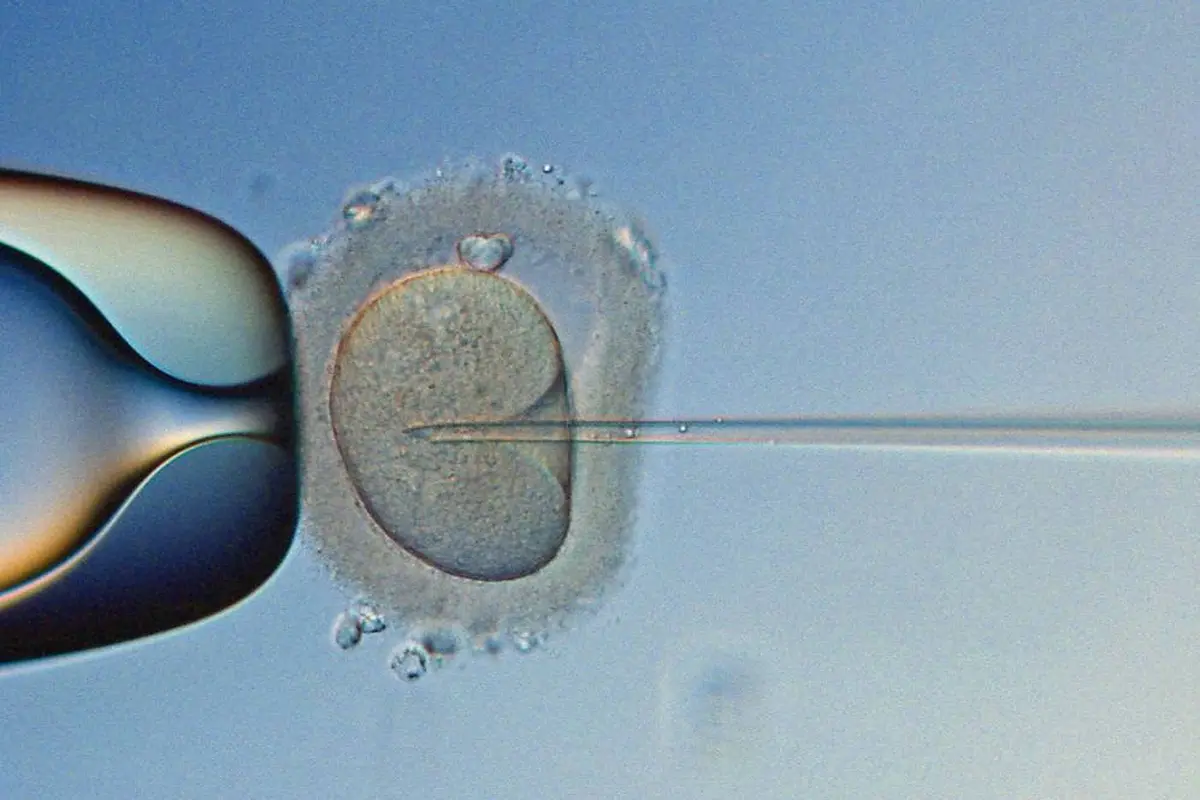
- ICSI (intracytoplasmic sperm injection): a form of IVF; the only difference is the fertilisation step — the embryologist injects a single sperm into each mature egg with a micro-needle.
How does IUI work?
IUI is the least intensive of the three. It can be done in a natural cycle or with mild ovulation stimulation. Your doctor tracks follicle growth by ultrasound; when the egg is mature, ovulation is timed either by detecting the LH surge with a hormone test or with a trigger injection. On the day, a sperm sample is "washed" in the lab: the seminal fluid is removed and the most motile sperm are selected. A thin, soft catheter is then passed through the cervix and the sperm is placed in the uterine cavity. It takes a few minutes, is usually painless or mildly uncomfortable, and needs no anaesthetic. You then take a pregnancy test on a date set by your clinic.
What it needs: at least one open fallopian tube and enough motile sperm. Time: each attempt takes one menstrual cycle — usually a few ultrasound visits plus the procedure day. More: intrauterine insemination.
How does IVF work?
- Stimulation: about two weeks of hormone injections to grow several follicles, monitored with ultrasound and blood tests. More: what to expect during ovarian stimulation.
- Egg collection: under a short general anaesthetic or sedation, with a fine needle guided by ultrasound.
- Sperm: the partner gives a sample on the same day and it is prepared in the lab; if needed, previously frozen or surgically retrieved sperm is used.
- Fertilisation: in standard IVF each egg is placed in a dish with prepared sperm, and a sperm fertilises the egg on its own.
- Embryo culture: embryos are grown and monitored in an incubator for 2–6 days. On day 1 the lab checks for signs of fertilisation; on days 2–3 an embryo usually has 4–8 cells, on day 4 it reaches the morula stage, and on days 5–6 the blastocyst stage with over a hundred cells.
- Transfer: the best embryo is placed into the uterine cavity with a thin catheter; other good-quality embryos can be frozen.
- Test: a blood pregnancy test about two weeks after transfer.
Time: usually about a month from the start of stimulation to the test, with several visits along the way. For more on the stages, see how IVF works and our IVF page.
What is different about ICSI?
With ICSI, stimulation, egg collection and transfer are exactly the same as IVF. The difference is only in the lab: under a microscope, the embryologist selects one sperm and injects it into the egg with a fine micro-needle. For the woman, treatment feels almost identical. ICSI is usually recommended when:
- sperm count is very low, or motility or shape is poor;
- eggs did not fertilise, or very few did, in a previous IVF cycle;
- sperm has been retrieved surgically (for example by TESE);
- frozen sperm is of poor quality;
- genetic testing of embryos (PGT) is planned — so that DNA from extra sperm stuck to the outside of the egg does not distort the result.
That last point is often misunderstood: ICSI itself does not detect or prevent inherited diseases. Genetic testing of embryos is a separate procedure — PGT. Also, for couples without a male factor, ICSI has not been shown to be better than standard IVF; according to the UK regulator HFEA, ESHRE does not recommend it over standard IVF in these cases. ICSI's risks are small but real: some eggs may be damaged by the injection, and if male infertility has a genetic cause (for example a Y chromosome change), it may be passed on to a son — genetic counselling is advised in such cases. More: ICSI.
Side-by-side comparison
- Where fertilisation happens: IUI — in the body (fallopian tube); IVF and ICSI — in the lab.
- What the woman goes through: IUI — ultrasound monitoring and a catheter procedure, sometimes mild medication; IVF and ICSI — hormone injections, egg collection under anaesthesia and embryo transfer.
- Fallopian tubes: IUI needs at least one open tube; IVF and ICSI do not.
- Sperm requirements: IUI — enough motile sperm; standard IVF — also needs a reasonable number of motile sperm, though fewer than IUI; ICSI — very few sperm, or surgically retrieved sperm, may be enough.
- Time and visits: IUI — one cycle, a few short visits; IVF and ICSI — about a month, more visits and one procedure under anaesthesia.
- Cost: IUI is considerably cheaper; IVF and ICSI cost more.
- Success: according to HFEA, IUI success rates are generally around a third of those for IVF; they are higher in younger women and when fertility drugs are used, and many people need several cycles. With the right indication, ICSI and IVF results are similar.
- Main risks: IUI — twins or more when drugs are used; IVF and ICSI — ovarian hyperstimulation syndrome (OHSS) and multiple pregnancy if more than one embryo is transferred; ICSI — rarely, damage to an egg.
When do you move from IUI to IVF?
- if the tubes are blocked or damaged — IUI is not recommended at all in this case;
- with a severe male factor or no sperm in the ejaculate (azoospermia);
- if there is no pregnancy after several (often 3–4) IUI cycles;
- if the woman is over 40 or ovarian reserve is low — time becomes a bigger factor;
- with severe endometriosis or significant problems of the uterus or ovaries.
How does your doctor choose?
The choice rests not on one test but on the whole picture: the woman's age and ovarian reserve (AMH), the state of the tubes, the semen analysis, how long you have been trying and any previous attempts. For example, if the woman is young, the tubes are open and sperm values are only mildly reduced, IUI may be discussed first. With blocked tubes, the usual route is IVF; with very few sperm or failed fertilisation in a previous cycle, ICSI. Sometimes a couple prefers to go straight to IVF because of time or other reasons; that too is something to discuss openly with your doctor.
At Ankalife IVF Centre, a doctor reviews both partners' results together and explains why a particular method is being suggested. Book a consultation.
Frequently asked questions
Does IUI hurt?
Usually not. It feels similar to a gynaecological exam, lasts a few minutes and needs no anaesthetic; some women feel a mild cramp.
Is ICSI "stronger" than IVF?
It only has an advantage when there is a male factor or a previous fertilisation problem. With normal sperm values, ICSI has not been shown to improve results.
Does ICSI detect genetic diseases?
No. ICSI is a fertilisation method. Genetic testing of embryos is called PGT and is recommended for specific medical reasons.
Is the chance of twins higher with IVF?
Yes, if more than one embryo is transferred. That is why the 2024 guideline of the European Society of Human Reproduction and Embryology (ESHRE) recommends single embryo transfer as the standard; other good-quality embryos are frozen.
This article is general information, not a diagnosis or treatment recommendation. Only a doctor can decide which method suits you, based on an examination and your test results.
Sources
- HFEA (UK) — Intrauterine insemination (IUI)
- HFEA (UK) — In vitro fertilisation (IVF)
- HFEA (UK) — Intracytoplasmic sperm injection (ICSI)
- ESHRE — Guideline: number of embryos to transfer during IVF/ICSI (2024)
Still have questions? Leave your number and we will call you
Your details are used only to contact you.